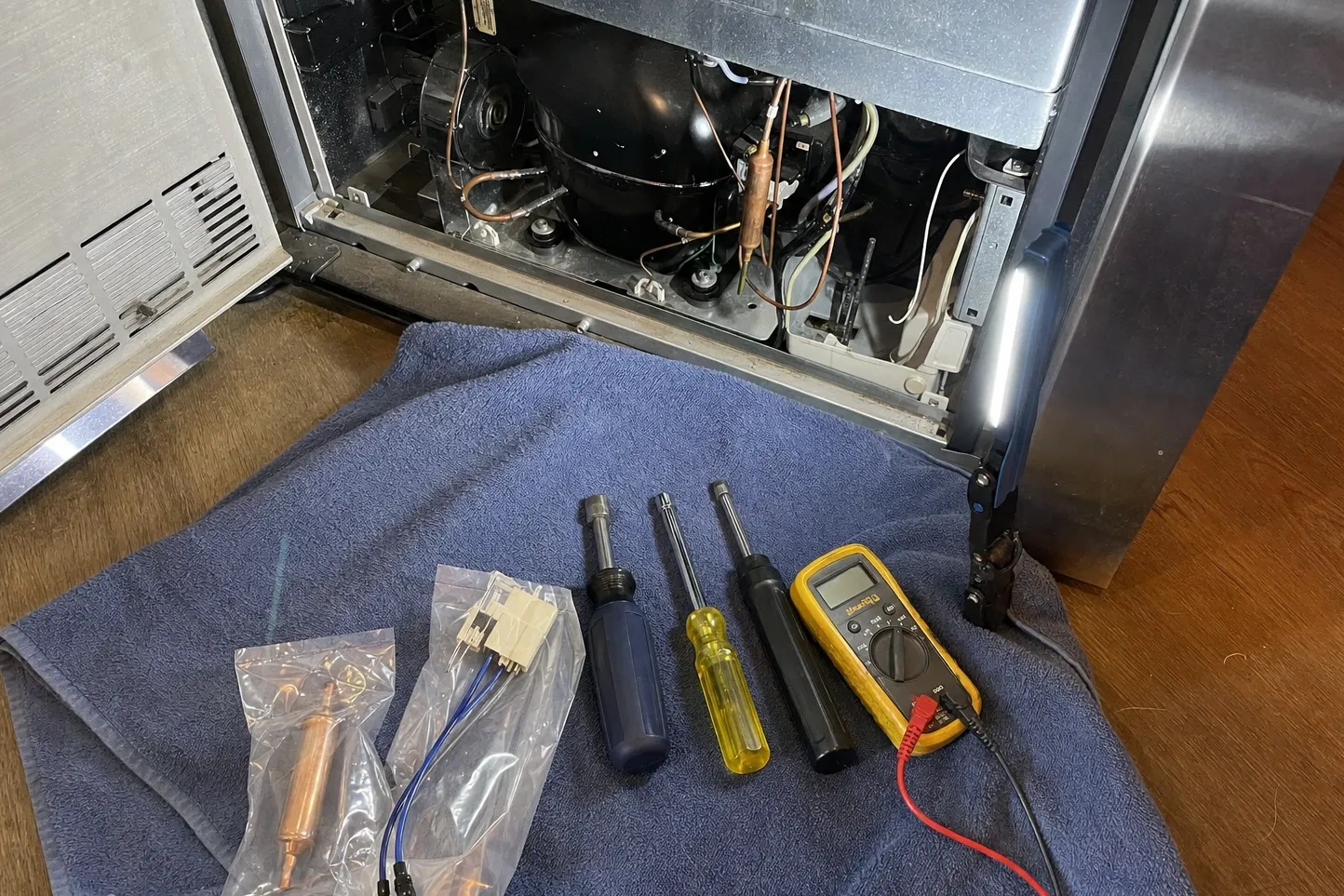
Refrigerator Repair
Fridge Sweating on the Inside? Tracing the Water in a Sub-Zero
Written by
Yuki Tanabe
Refrigeration technician — controls and sensors · 18 years in the trade
Tests a sensor against an independent reading rather than trusting the display it feeds. Drift is quiet, cheap to correct, and routinely mistaken for a dying compressor.
If water is beading on the walls, dripping off the glass shelves or collecting under the crisper drawers, your fridge is sweating because moist air is reaching surfaces cold enough to pull water out of it, and the cabinet’s normal way of disposing of that water has fallen behind. In a healthy refrigerator the evaporator coil is the coldest thing in the box: it gathers moisture as frost, melts it off during defrost, and sends it down a drain to a pan where it evaporates. Sweat on the inside means one link in that chain has slipped. In Pacific Palisades and Brentwood, where the marine layer can push damp ocean air through an open kitchen door on late-spring mornings, the door seal is the natural first suspect, but it is seldom the whole story.
Why cold walls collect water
When warm air meets a surface colder than its dew point, its vapor turns into droplets, exactly as on a glass of iced tea. A fresh-food section held in the high thirties sits far below that point, so every opening brings in fresh moisture for the coil to capture. When that coil is choked with ice, its fan has quit, or more moisture arrives than it can absorb, the liner and shelves become the next coldest place and the water lands there. If you are unsure what your cabinet ought to read, our note on what temperature a Sub-Zero should hold lists the usual setpoints.
Four places the water can come from
Where the moisture appears usually tells you where it started.
| Where you find water | Most likely source | First thing to look at |
|---|---|---|
| Fine beads on side walls and door bins | Door seal, or a door left ajar | Gasket contact all the way round |
| A puddle beneath the crisper drawers | Blocked or frozen defrost drain | The drain opening low on the back wall |
| Water on the floor in front of the unit | Drain pan overflow or a cracked pan | The machine compartment, by a technician |
| A frozen ridge in the freezer | Supply line, valve or ice maker fill | The fill area and the line behind the cabinet |
The door and its gasket
A gasket that has hardened, split or taken a permanent crease lets a thin draft of room air seep in around the clock. The giveaway is sweat gathered near the door edge and on the bins, sometimes with a line of frost on the freezer side. A tall bottle or an overloaded bin can hold a door a few millimetres off its seal without anyone noticing.
Classic (CL) and Designer (DET, DEC) units offer a clue: dark interior lights may mean the control switched them off on purpose because it believes a door or drawer was left ajar, a measure meant to keep extra heat out. Sub-Zero’s advice is to shut it firmly and give it one hour before asking for service.
The defrost drain
Defrost meltwater leaves through a narrow drain. Crumbs, spilled juice or a sliver of ice can plug it, and the water backs up across the cabinet floor or freezes into a glassy sheet. Puddles beneath the crisper drawers, with walls that otherwise look dry, point squarely here.
The drain pan
The drain empties into a shallow pan in the machine compartment, where condenser warmth dries it off. A cracked or dislodged pan usually shows up on the floor rather than inside, but it shares a root cause with interior sweat: too much moisture coming off the coil.
The water supply line
Units with an ice maker or dispenser carry a water line, a valve and a fill tube. A slow weep at any of them can leave water inside the freezer that looks like condensation until you notice it keeps returning to the same corner. Our short answer on an ice maker leaking into the freezer follows that path.
What you can safely check yourself
- Dry every surface with a towel, then look again the next morning and note exactly where the water came back.
- Close the door on a sheet of printer paper at several points around the frame. Wherever it slides out with no drag, the gasket is not sealing there.
- Move anything that keeps a door from closing or blocks the vents inside, and put lids on liquids and cut produce.
- Rest a thermometer in a cup of water near the center of the cabinet overnight, then compare its reading with the setting you chose.
- If the back of the freezer wears a thick crust of ice, switch the unit off first. The owner guides differ by line: Classic (CL) and Designer (DET, DEC) owners may melt it with a hair dryer turned low and never held still, while PRO Series owners are told to use a handheld steamer instead of the dryer. Never chip at ice with a knife, since one slip can puncture tubing that carries refrigerant.
- Leave the condenser alone on a new unit: Sub-Zero says one less than 6 months old does not need cleaning. On an older one, cleaning helps the system but will not cure a clogged drain or a tired seal.
Signs the sweat has become a parts problem
Sweat that returns within a day after you have cleared the door and covered the food points to a component, not a habit. Ice that keeps rebuilding on the back wall suggests defrost is not finishing, often a heater, thermostat or sensor. A silent fan beside frost creeping over the coil cover is another.
Temperature is the clearest signal: once the fresh-food side has climbed past 48 degrees on a 38-degree setting, Sub-Zero’s view is that condenser cleaning will not bring it back. When EC40 appears with Service flashing (the 648PRO is one model that reports it), Sub-Zero lists several culprits: the freezer compressor running far longer than normal, a door that never latched, or a fault somewhere in the sealed system, one of the fans or a sensor. Read the freezer temperature before doing anything. Within 10 degrees of the setpoint, a condenser cleaning is the suggested step; more than 10 degrees over, with the door confirmed shut, it is time for a technician. Sub-Zero also warns against wiping the code while the numbers keep rising.
What a fix typically costs
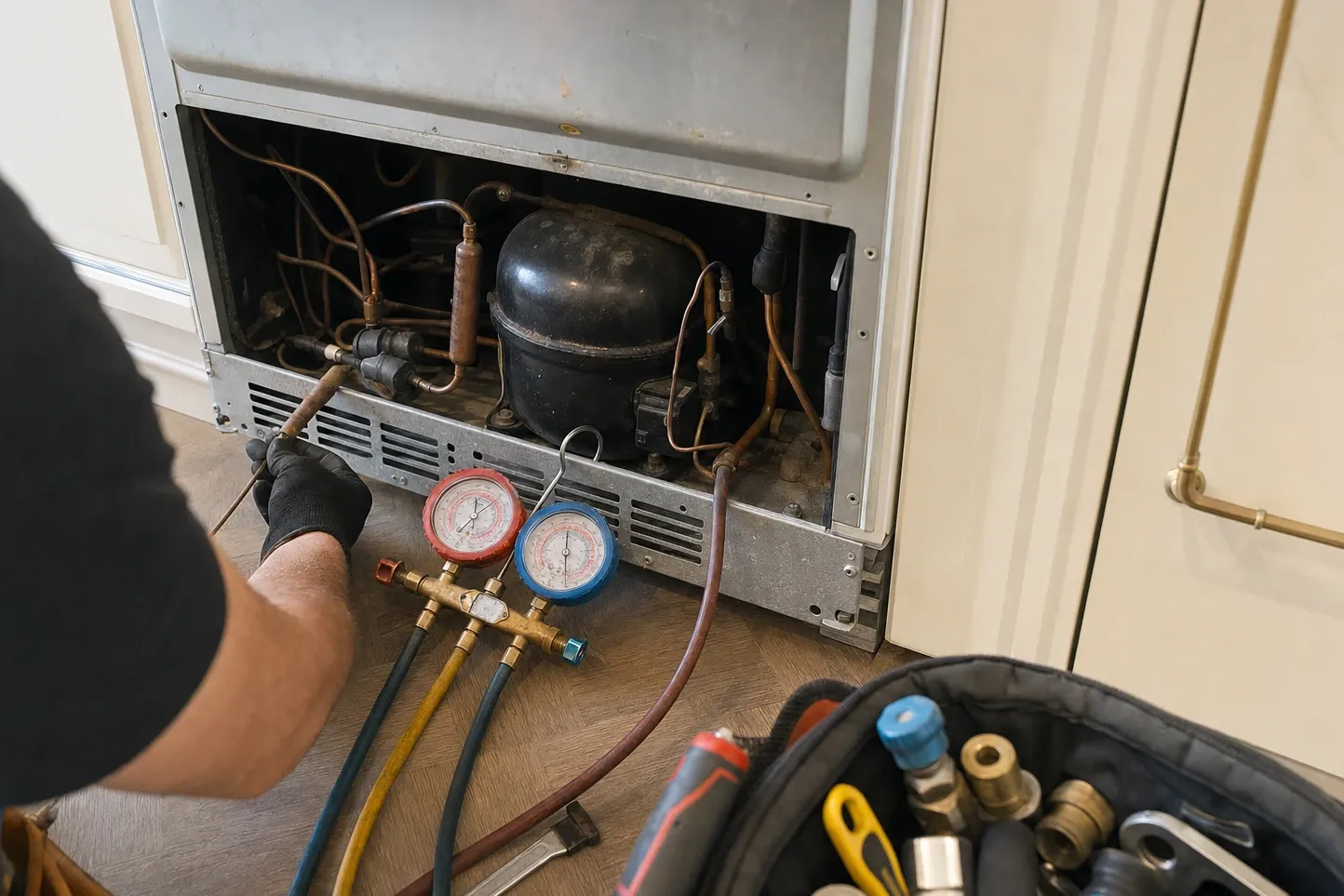
Every visit begins with the $89 service call, which covers a technician arriving with gauges and meters to pin down the real source; approve the repair and that $89 is deducted from it. These are typical figures, and the firm quote comes only after diagnosis:
- Door gasket or seal replacement: $260–$680
- Defrost heater, thermostat or sensor: $280–$610
- Evaporator or condenser fan motor: $300–$720
- Ice maker, water valve or supply line: $260–$840
A fridge that drips but still holds its temperature can wait for a convenient day; one that sweats and warms together should not. Whether the kitchen is in Bel-Air or Hancock Park, reach us at (310) 496-7399 or through the booking button on this page, and our refrigerator repair page explains what that work covers.
Follow-ups
- Is some condensation inside a refrigerator normal?
- A light mist that forms after a long door opening on a muggy day and fades within the hour is normal. Droplets that run down the liner, pool under the crisper drawers or return every morning are not, and they usually lead back to a leaking seal, a blocked defrost drain or a setting that has drifted warm.
- How do I stop condensation inside my fridge?
- Cut the moisture going in, then make sure the cabinet can shed what is left. Cover soups and cut fruit, let leftovers lose their heat before they go onto a shelf, keep door openings brief, check that no jar is holding the door off its seal, and confirm with a thermometer that the setpoint is being held.
- How can I tell if my refrigerator is overheating or failing?
- Watch for a compressor that hardly ever pauses, milk that feels less cold than it should, a softening freezer, and sweat that returns however often you wipe it. Sub-Zero's guidance is that a unit reading above 48 degrees while set to 38 is unlikely to be rescued by a condenser cleaning, so arrange service at that point.
- Can a water line leak look like sweating inside the fridge?
- Yes. On a model with an ice maker or dispenser, a weeping fitting, a cracked tube or a tired inlet valve can leave water on the freezer floor that passes for condensation at first glance. The tell is that it appears in the same spot every time and often freezes into a ridge instead of beading evenly.